
The 2026 Square Local Economy Report confirms that loyal locals are reshaping how small businesses grow, with regular customers driving six times more annual revenue than one-time visitors. This shift toward everyday local trade is creating what researchers call the “neighborhood network effect”: when a coffee shop thrives, the salon next door benefits, and regular customers are often supporting five other businesses in the same zip code. Square’s analysis reveals that 32% of regular customers are shared between businesses within the same zip code, with each network connection generating thousands in additional annual revenue $2,201 in Los Angeles and $2,025 in San Francisco. Nearly three in four consumers now buy from a local retailer within their postcode at least once a week, making multiple stops in a single neighborhood trip. Faire’s 2026 retail trends report supports this movement, identifying four key trends driving consumers back to local stores, with consumers prioritizing products that reflect identity, community, and self-expression. The psychology behind this shift is rooted in social capital theory: the more an individual exhibits civic behavioral commitment to their community, the greater their small-retailer patronage. Meanwhile, national chains face a “trust vs. consistency dilemma” while 47% of consumers value consistency from national brands, only 12% actually prefer to buy from franchises over local businesses, because consumers trust businesses that feel localized, authentic, and community-driven.
Community Commerce in 2026: The Resurgence of Local Business
Local business is experiencing a genuine renaissance as customers increasingly seek community alternatives to national chains and online-only options. This guide explores the broader trends driving the local commerce resurgence and shows how your business can capitalize on this movement. You’ll understand the psychology of community preference, the economic advantages of participating in local commerce, and the strategic positioning that attracts community customers. The article includes data on community commerce growth, demographic trends supporting local business, and forward projections for local commerce.
Yes. The data suggests a permanent behavioral shift. In Square’s survey, 75% of consumers plan to spend at least as much if not more at local businesses over the next 12 months, and 81% of Canadians said they plan to shop in their local neighborhoods just as much as they did last year or even more.
Coffee shops and casual dining establishments serve as the most common neighborhood connectors, acting as everyday hubs that funnel customers to retail, beauty, and service businesses. However, retail trends show growing demand for value-driven retail, smaller store footprints, experiential tenants, and grocery-anchored growth.
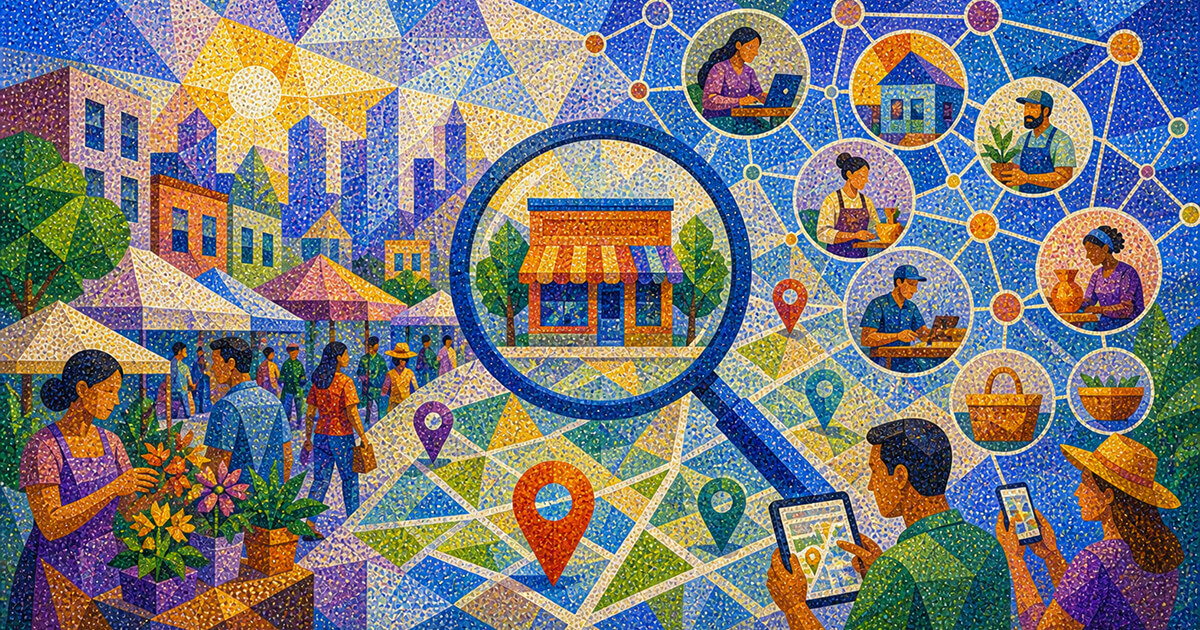
The neighborhood network effect is the phenomenon where loyal customers support multiple local businesses in the same area, creating interconnected local economies. Leverage it by partnering with complementary nearby businesses (e.g., a café cross-promoting with a bookstore and a salon), offering joint loyalty programs, and making your location a regular stop on customers’ neighborhood routines.